
Clubs Poker Becomes First Sweepstakes Poker Site to Exit Maine
Maine’s new sweepstakes ban is already pushing poker-focused platforms to restrict access before the July deadline.
Angelica | July 7, 2026

Key Takeaways
- Clubs Poker has become the first sweepstakes poker site to exit Maine after the state enacted LD 2007, a law prohibiting certain online sweepstakes games.
- The move shows how sweepstakes poker operators are being affected by the same dual-currency restrictions already reshaping sweepstakes casino access.
- Operators, affiliates, and players should watch whether more poker-only platforms update their restricted-state lists as Maine’s law takes effect.
What Happened?
Clubs Poker has withdrawn from Maine following the state’s enactment of LD 2007, formally titled An Act Regarding the Prohibition of Online Sweepstakes Games.
Poker Industry PRO reported that Clubs Poker is the first sweepstakes poker site to exit Maine, as sweepstakes operators continue retreating from states with stricter laws around promotional gaming models. The publication also noted that all four poker-only sweepstakes sites have exited Tennessee and operate as poker-only platforms in Indiana.
Maine’s LD 2007 was signed by Gov. Janet Mills on April 6, 2026, after passing the House on March 30 and the Senate on April 2. The law classifies certain online sweepstakes games using dual-currency systems as prohibited activity under state gambling law.
The statute applies to online games or contests that use a dual-currency payment model and simulate casino-style gaming, including poker, table games, slot machines, lottery games, bingo, and sports wagering.
Why This Matters
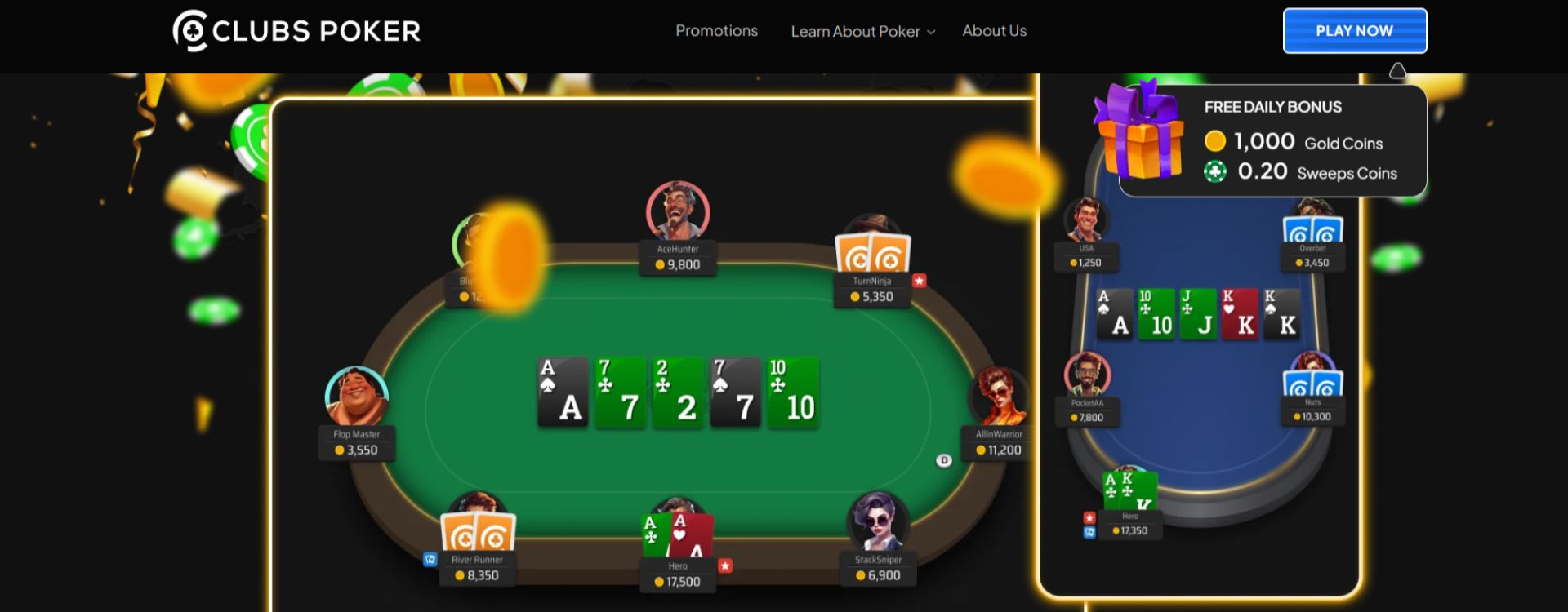
Clubs Poker’s Maine exit is significant because it shows that sweepstakes poker is no longer sitting outside the broader sweepstakes casino debate.
Many regulatory discussions around sweepstakes gaming have focused on casino-style slots and social casino platforms. Maine’s law is different because poker is directly named in the covered game categories. That matters for poker-only operators that may have previously viewed themselves as separate from slot-heavy sweepstakes casino platforms.
For operators, the development increases pressure to review state availability, promotional-currency mechanics, redemption terms, and player access controls. A state ban that directly includes poker makes geo-restriction and terms-of-service updates more than routine housekeeping.
For players, the immediate impact is reduced access to sweepstakes poker products in Maine. Players with existing accounts may need to monitor operator notices, balance redemption timelines, and account closure procedures.
For affiliates, the exit creates another compliance issue around state-specific availability. Pages listing Maine as an eligible state for sweepstakes poker, sweepstakes casinos, or dual-currency promotional gaming may now require urgent updates.
For investors and industry stakeholders, the withdrawal suggests that state-level bans are beginning to produce visible market exits rather than remaining theoretical legal risks.
Regulatory Background
Maine’s LD 2007 creates a direct prohibition on online sweepstakes games using dual-currency systems. The bill defines an online sweepstakes game as an internet-based game, contest, or promotion that uses a dual-currency payment system and simulates casino-style gaming.
The law’s scope is broad. It covers products that resemble slot machines, poker, table games, lottery games, bingo, and sports wagering when paired with a dual-currency structure.
The bill also clarifies that operating or promoting an online sweepstakes game may be treated as unlawful gambling under the Maine Criminal Code. Civil penalties can range from $10,000 to $100,000, with collected fines directed to the Gambling Addiction Prevention and Treatment Fund.
Maine is part of a wider state-level trend. Indiana, Tennessee, and other states have also created pressure points for sweepstakes operators, while several jurisdictions continue reviewing whether dual-currency promotional gaming should be banned, regulated, or challenged through enforcement.
Regulatory Risk Meter
| Factor | Assessment |
|---|---|
| Enforcement Risk | High |
| Litigation Risk | Medium |
| Operator Impact | High |
| Player Impact | Medium |
Why?
Enforcement risk is high because Maine’s law directly targets online sweepstakes games and expressly includes poker.
Litigation risk is medium, as challenges remain possible, but no major case tied to Clubs Poker’s Maine exit has been confirmed.
Operator impact is high because platforms may need to block Maine residents entirely.
Player impact is medium because access is restricted, though effects will depend on account closures, redemption windows, and operator notices.
Industry Impact
Clubs Poker’s Maine exit shows that sweepstakes bans are affecting more than casino-style platforms. Sweepstakes poker may now face the same state-by-state compliance pressure as sweepstakes casinos and social sportsbooks.
The move also creates work for affiliates, content publishers, payment partners, and vendors. State guides, operator reviews, restricted-state lists, and compliance controls may need faster updates as more states target dual-currency gaming models.
Compliance Questions Raised
Clubs Poker’s Maine exit raises several compliance questions for sweepstakes poker operators:
- Will more poker sites exit Maine?
- How will existing balances and pending redemptions be handled?
- Can poker-only platforms separate themselves from casino-style sweepstakes games when poker is listed in the law?
- Will affiliates need faster updates to state availability pages?
- Could Maine’s language become a model for other states?
These questions matter because regulators are focusing less on labels and more on how dual-currency models work, including prize redemption and promotional currency structures.
What Happens Next?
More sweepstakes poker operators may review Maine access and update their restricted-state lists.
Regulators could monitor whether platforms continue accepting Maine residents after LD 2007. Operators may respond by blocking access, updating terms, limiting redemptions for ineligible users, or sending notices to affected players.
Other states may also study Maine’s approach, especially its direct inclusion of poker and other dual-currency gaming formats. While court challenges remain possible, Clubs Poker’s exit suggests some operators may choose withdrawal over legal risk in states with clear restrictions.
Stakester Analysis

Clubs Poker’s Maine withdrawal carries broader regulatory significance because LD 2007 places poker directly within the state’s sweepstakes prohibition framework.
The move reflects a wider shift in alternative gaming regulation, where states are focusing on dual-currency mechanics tied to redeemable prizes rather than operator labels.
For sweepstakes poker operators, Maine shows how quickly legal risk can become market withdrawal. Future compliance decisions will likely depend more on state-specific definitions than on broad national availability.
Sources
Stakester Newsletter
Be the first to find out when a sweepstakes casino launches and receive exclusive offers directly in your mailbox.
About the author
Angelica
Angelica writes about iGaming and sports trend topics, sweepstakes regulation, market shifts, and player-focused developments across the online gaming world. Her work blends clear reporting with approachable context, making complex updates easier to understand.